

Introduction
Before the age of glass and steel skyscrapers, the architectural identity of the UAE’s coastal towns was defined by a unique and beautiful vernacular style. The coral stone and gypsum plaster houses, with their towering wind towers (barjeels) and intricately carved screens, were a masterful response to the harsh climate. The decorative elements carved from gypsum, in particular, represent a high form of architectural artistry. These were not mere ornaments; they were sophisticated environmental design elements that provided privacy, ventilation, and light, while adorning the cityscape with a lace-like beauty.
History
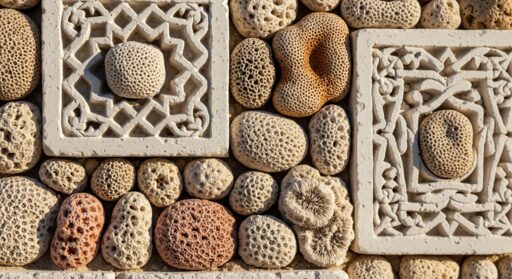
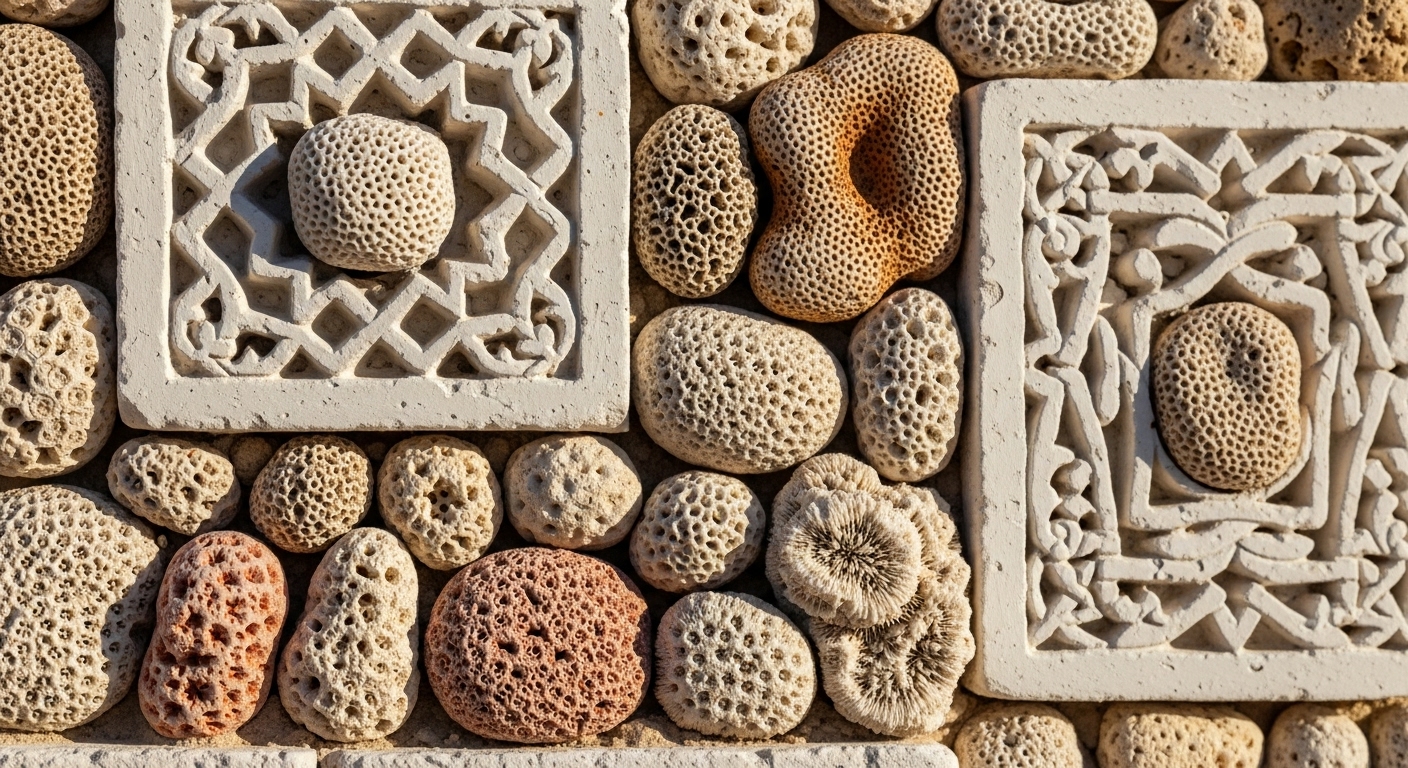
The use of coral stone and gypsum was perfected in coastal trading centers like Dubai, Sharjah, and Ras Al Khaimah from the late 19th century until the mid-20th century. Coral stone (alus) was quarried from the seabed, cut into blocks, and bonded with a lime-based mortar. This created thick, load-bearing walls that provided excellent insulation. Gypsum, a soft mineral readily available in the surrounding mountains, was baked in kilns to create plaster. This plaster was the medium for the craft. Master craftsmen, known as naqqashoon (engravers), would create the ornate screens (mashrabiya or roshan) and decorative niches that characterized the finest homes of merchants and rulers.
Key Features
The gypsum ornaments were both functional and profoundly aesthetic:
- The Roshan (Gypsum Screen): This was the most prominent feature. It was a large, projecting window screen made of gypsum panels pierced with intricate geometric and floral patterns. It served multiple purposes: it allowed cool air to circulate, filtered the harsh sunlight into a soft, dappled glow, and provided privacy for the inhabitants inside, in accordance with cultural norms.
- Geometric and Floral Motifs: The carvings drew from Islamic art, featuring complex geometric patterns (girih) and stylized floral designs. The repetition and symmetry of these patterns created a sense of harmony and infinity.
- Decorative Niches and Panels: Gypsum was also used to create beautiful decorative niches (kour) in interior walls for storing items, as well as for ornate cornices and friezes that added a touch of refinement to courtyards and reception rooms.
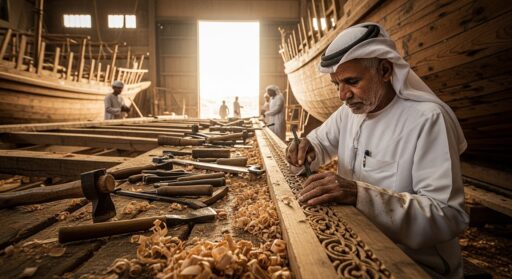
- The Craftsmanship: The naqqash would carve the patterns into the wet gypsum plaster or, for more complex screens, create them by casting the plaster in wooden molds. The speed and precision required were extraordinary.
Cultural Significance
This architectural style was a clear marker of social and economic status. The size and intricacy of a building’s roshan indicated the wealth and importance of its owner. More broadly, it represented a cosmopolitan identity. The use of wind towers showed influence from Persia, while the geometric patterns reflected a shared Islamic artistic heritage. The entire design—the thick coral walls, the wind towers, and the gypsum screens—was a holistic and highly effective system of passive cooling, demonstrating a deep, pre-industrial understanding of sustainable architecture tailored to the local environment.
Modern Relevance
With the construction boom of the 1970s, this traditional architecture was largely abandoned in favor of modern building techniques. Many old houses were demolished. However, there is now a passionate conservation movement. Historic districts like the Al Fahidi Historical Neighbourhood in Dubai and the Heart of Sharjah have been meticulously restored, allowing visitors to experience the beauty and cleverness of this architectural heritage. The motifs and principles of this style have found new relevance. Modern architects in the UAE often incorporate abstracted versions of the geometric patterns into the facades of contemporary buildings, creating a dialogue between the past and present. The roshan is celebrated as an iconic symbol of pre-oil elegance and environmental intelligence.
Conclusion
The gypsum and coral ornaments of the UAE’s traditional architecture are a faded yet unforgettable signature on the urban landscape. They tell a story of a time when beauty was woven into the very fabric of daily life, when buildings breathed with the climate, and when artisans translated cultural values into stone and plaster. Preserving these structures is not an act of nostalgia, but an acknowledgment of a sophisticated design legacy. In the gleaming glass of the modern city, we can still see the reflection of its elegant, lace-carved predecessor, a reminder that true sustainability and beauty have always been at the heart of Emirati creativity.