

Introduction
In the vast, unforgiving expanse of the desert, the Bedouin people developed a rich material culture centered on survival and beauty, with Al Sadu standing as its most eloquent expression. More than just a utilitarian craft for creating tents, cushions, and camel trappings, Al Sadu is a poetic language woven into fabric. This ancient art of weaving, traditionally practiced by women, tells stories of the desert environment, social identity, and aesthetic values through its patterns, colors, and techniques. Recognized by UNESCO for its cultural significance, Al Sadu is a vibrant thread connecting modern Emiratis to the wisdom and resilience of their nomadic ancestors.
History
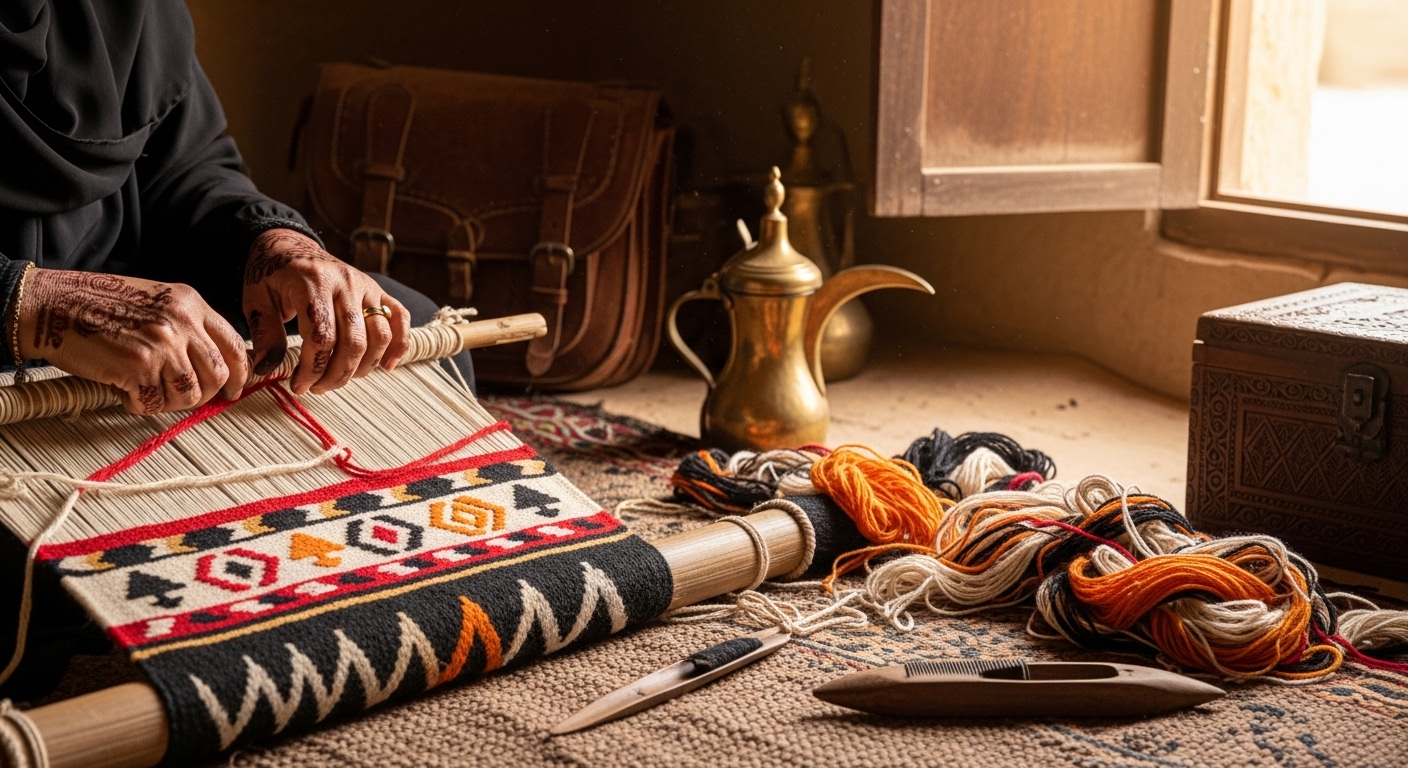
The origins of Al Sadu are as old as Bedouin culture itself, dating back centuries. It was born from necessity, utilizing the only resources readily available in the desert environment: the wool from sheep, goats, and camels. The entire process was a communal, female-led activity. Women would shear the animals, clean and card the wool, spin it into yarn using a drop spindle (ighazal), and then dye it using natural pigments from plants, minerals, and insects. The weaving itself was done on a ground loom, a simple but ingenious portable loom stretched out on the desert floor, allowing the craft to travel with the tribe. These woven items were not for sale but were crucial for daily life, providing shelter (the bait al-sha’ar, or house of hair), storage, and decoration.
Key Features
Al Sadu is distinguished by its unique techniques and visual language:
- The Ground Loom: This loom consists of two wooden beams between which the warp threads are stretched and pegged to the ground. The weaver sits on the ground, moving back and forth as she works, embodying a deep connection to the earth.
- Warp-Faced Plain Weave: The technique produces a tight, durable fabric where the vertical warp threads completely cover the horizontal weft threads. This creates a perfect canvas for the bold, geometric patterns.
- Symbolic Motifs: The patterns are not merely decorative; they are a symbolic lexicon. Common motifs include al hurr (the free one, representing a zigzag), al shajarah (the tree), and al umm al-thuban (the mother of snakes), each reflecting elements of the desert landscape and Bedouin belief systems.
- Color Palette: Traditional colors were derived from the desert: deep reds from madder root, rich browns and blacks from acacia bark, and whites from undyed wool. These earthy tones symbolized the desert, sky, and the very essence of the Bedouin world.
Cultural Significance
Al Sadu was the cornerstone of Bedouin matriarchal artistic expression. While men were responsible for herding and hunting, women were the architects of the domestic sphere and its aesthetic. The sadu tent was a mobile home and a symbol of family identity; its interior, adorned with beautifully woven items, was a space of hospitality and pride. The craft was a social activity, where women gathered to weave, sing, and share stories, passing techniques and oral traditions from mother to daughter. It was, in essence, a tactile diary of tribal life and a testament to the ability to create profound beauty in a harsh environment.
Modern Relevance
Today, Al Sadu faces the challenge of modernization, but it is far from a forgotten relic. It has been powerfully reclaimed as a symbol of national heritage. The UAE government, along with dedicated organizations and master weavers, actively works to preserve the craft. The Al Sadu Society in Kuwait, with relevance across the Gulf, and various UAE heritage centers work to document patterns, teach new generations, and support contemporary artisans. Modern designers are also incorporating Sadu motifs into high fashion, home décor, and public art, creating a new, contemporary language for this ancient craft. It is taught in workshops and showcased in museums, ensuring that this iconic art form continues to be a living, evolving part of Emirati culture.
Conclusion
Al Sadu is much more than a historical craft; it is a philosophical approach to life. It speaks of resourcefulness, community, and a deep, abiding connection to the natural world. The rhythmic motion of the weaver, the feel of the hand-spun wool, and the emergence of a symbolic pattern from a simple loom are acts of cultural preservation. In a nation that has hurtled into the future, Al Sadu serves as a vital anchor to the past, a beautiful and enduring reminder that the soul of the UAE will always be rooted in the values and artistry of the desert.